Note: As of January 20, Bill Christieson has asked to step back from his role with Indigenous Relations Working Group. If IRWG intrigues you, please contact any of the members or Tim Wiebe-Neufeld at execmin@mcab.ca

Reflections from the Indigenous Relations Working Group Workshops

Reflections from the Indigenous Relations Working Group Workshops

March Gathering and ADS

At the 2025 MCA Gathering, the newly established Indigenous Relations Working Group (IRWG) held circle conversations to get to know the knowledge, experience, and longings of our Alberta Mennonite community and learned there was a desire to have opportunity to build relationships with Indigenous people. We then encouraged attendees to attend pow-wows, round dances, and to be courageous in starting conversations with Indigenous neighbours.

Since then, the IRWG has been dreaming of and planning for a retreat June 5-7 at Camp Valaqua – on Treaty 7 land. We began with a small circle of two Mennonites and two Indigenous elders, and are expanding our circle to include members of the
Creation Care and IR Working Groups. We hope that at the retreat, our elders, Ollie and Virgil, will share teachings of the history and topography of the land.  

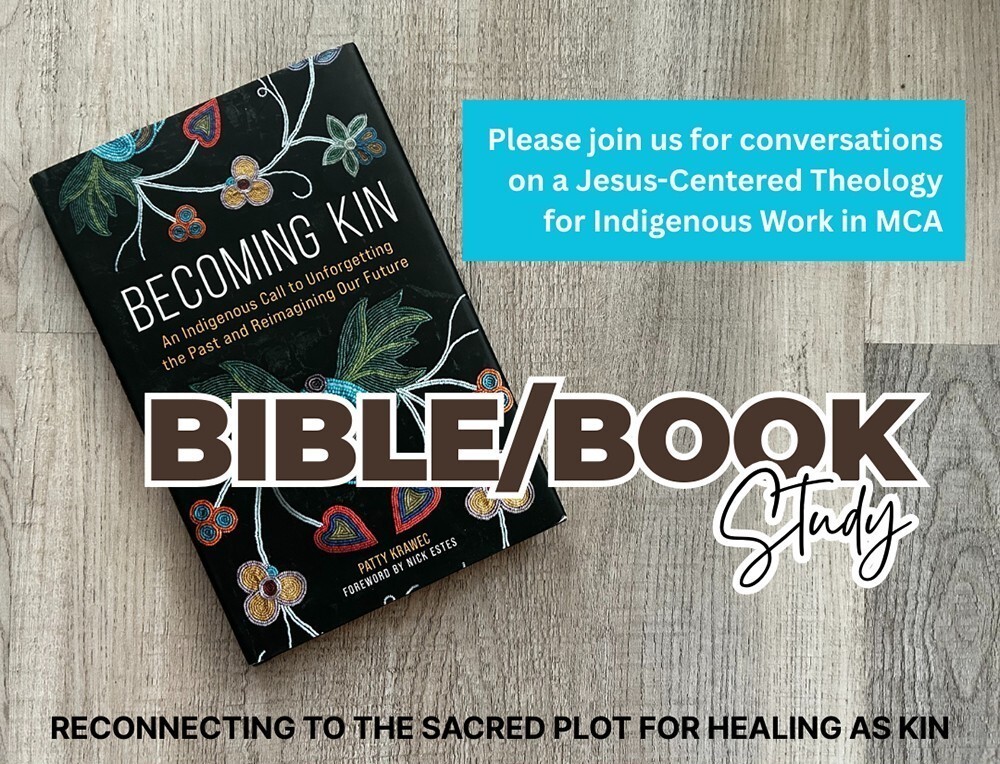
Leading up to this retreat, IRWG organized a Book/Bible study on “Becoming Kin” by Patty Krawec that concluded April 7. Krawec peppers the book with Indigenous perspectives and Biblical references giving us a parallel scriptural structure to her ideas and challenges. Thus we ground the work of Truth and Reconciliation in our own scriptural wisdom.

Suzanne and Ruth organized our two 2026 workshops as a time to reconnect with our experiences and longings on the different lands and treaty histories we come from. We moved to two areas out of our book study: grief experienced by the Indigenous at the hands of government policies and decisions that displaced, disenfranchised and tried to erase Indigenous culture, languages, and ways;  and some helpful strategies to become stronger, more grounded allies.


Afternoon Workshop Participants, L-R: Marie Moyer, rob peters, Suzanne Gross, Ruth Bergen Braun (on the computer screen), Valerie Proudfoot, Eric Klaassen (photo credit: Linda Dickinson)

Workshop reflections:

We shared memories of having attended some of the TRC gatherings, hearing stories of loss and abuse. We used “violation and humiliation” to describe the treatment and experience of Indigenous people in our past and present, contributing to the profound grief in many Indigenous stories, such as:

  • casting indigenous culture as “evil”
  • taking land and displacing Indigenous people
  • taking children at a young age away from family and placing them in residential schools
  • giving children messages of cultural and linguistic inferiority
  • cutting hair, burning clothes, and giving new names without permission 
  • incarcerating for small crimes (e.g. for drinking beer in a standing car on reserve....)
  • 60s scoop and the current foster care system as an extension of the strategy of removing children from Indigenous families
  • betrayals of promises made through treaty
  • system “control”  e.g. saying “can’t do” when asked to accommodate indigenous ways, especially around kinship (e.g. keeping families together)

We heard that unhelpful messages such as “they should just get over it” are still prevalent.

As a group, we shared strategies to become better allies:

  •  we must tell our full (Mennonite/family) histories – the good and the bad; and we must share our stories courageously and honestly
  •  we must expand our points of interactions – from our systems (e.g. prison, school, hospitals) to coffee shops and pool halls (yes! One of us plays pool in the community!)
  •  recognizing that Indigenous spirituality is not a religion, it is rooted in ceremony of smudge, prayer, drumming, dancing...
  •  working on forming deep relationships as a strategy for making meaningful amends rather than count on the government to make amends
  •  offering land acknowledgements from the heart, embedded in prayer and commitment to good relations
  •  “Do the work and get to know us!” We must put ourselves aside to form mutual relationships
  •   pay attention to what we hold in our “sacred bundles” -- that they contribute to good relations with Creator God, with each other and that they heal that which needs healing.

In the first session, one participant requested a quick review of the medicine wheel as a tool all of us might benefit from using. The medicine wheel is a circle with four quadrants that serves to keep us in healthy balance, a tool to keep our physical, mental, emotional and spiritual axes in balance by connecting to the four directions, the four seasons, the created world, and our own journey as children of our Great Spirit God. When we reconnect to the medicine wheel, we become good medicine for our own healing, for the healing of the community, and for the healing of the earth.

In the second session, we heard a story of learning from Elder Ollie that the Camp Valaqua old chapel site, by the creek, used to a be a sacred gathering place for ceremony, and how grateful Ollie was that this place continues to be used for sacred gatherings.    

As we continue on the path of understanding Truth and living into Reconciliation, may we put into practice the wisdom that came together in our sessions!
May it be so! Amen.

Biblical texts for Decolonization through Unforgetting: Lessons from “BECOMING KIN” by Patty Krawec

Biblical texts for Decolonization through Unforgetting: Lessons from “BECOMING KIN” by Patty Krawec

Reconnecting to the Sacred Plot for Healing as Kin

Join us for conversations on a Jesus-Centered Theology for Indigenous Work in MCA

Biblical texts for Decolonization through Unforgetting: Lessons from “Becoming Kin” by Patty Krawec


RECONNECTING TO THE SACRED PLOT FOR HEALING AS KIN

 1. Grief and the sin and impact of “fat takers”

 2. From Grief to healing: Our teachers and our “sacred bundles”

 3. Understanding Relationships

 4. The problem with geographical and spiritual conquest

 5. Land: sojourning and colonizing and Jubilee

 6. Building resilience and solidarity

 7. Preparation for repair

 Schedule: Tuesdays from 10:00-11:30 by Zoom

Feb. 10, 24, March 2, 10, 17, 24, 31

Contact Suzanne Gross at suzannegrosss@netscape.net for Zoom link

  Indigenous Relations Working Group

The Apostle Paul left us with the mission of reconciliation! 

What is God calling us to do as individuals, as localized church communities and collectively when it comes to nurturing conciliatory relationships with Indigenous neighbours? 

How are we being called to contribute to the repair of harm done through our collective history of settler-colonialism? 


The Mennonite Church Alberta Indigenous Relations Working Group was born October 5, 2024  and we are ready to support our MCA congregations as they journey in this through the myriad ways we all learn and grow!


Mennonite Church Canada called together Climate Action/Creation Care and Indigenous Relations Working Groups from across the country to meet in Pinawa, Manitoba, October 4-6, 2024. Twenty five people, including 7 from Alberta, answered the call. One of the first assignments, Saturday morning, was to answer the questions "How did your group start? How long has it been around? Who initiated it?" Mennonite Church Alberta can thank Bill Christieson for answering the "how long" question by writing down October 5, 2024 as the MCA IR Working Group start date.  


Get to know us
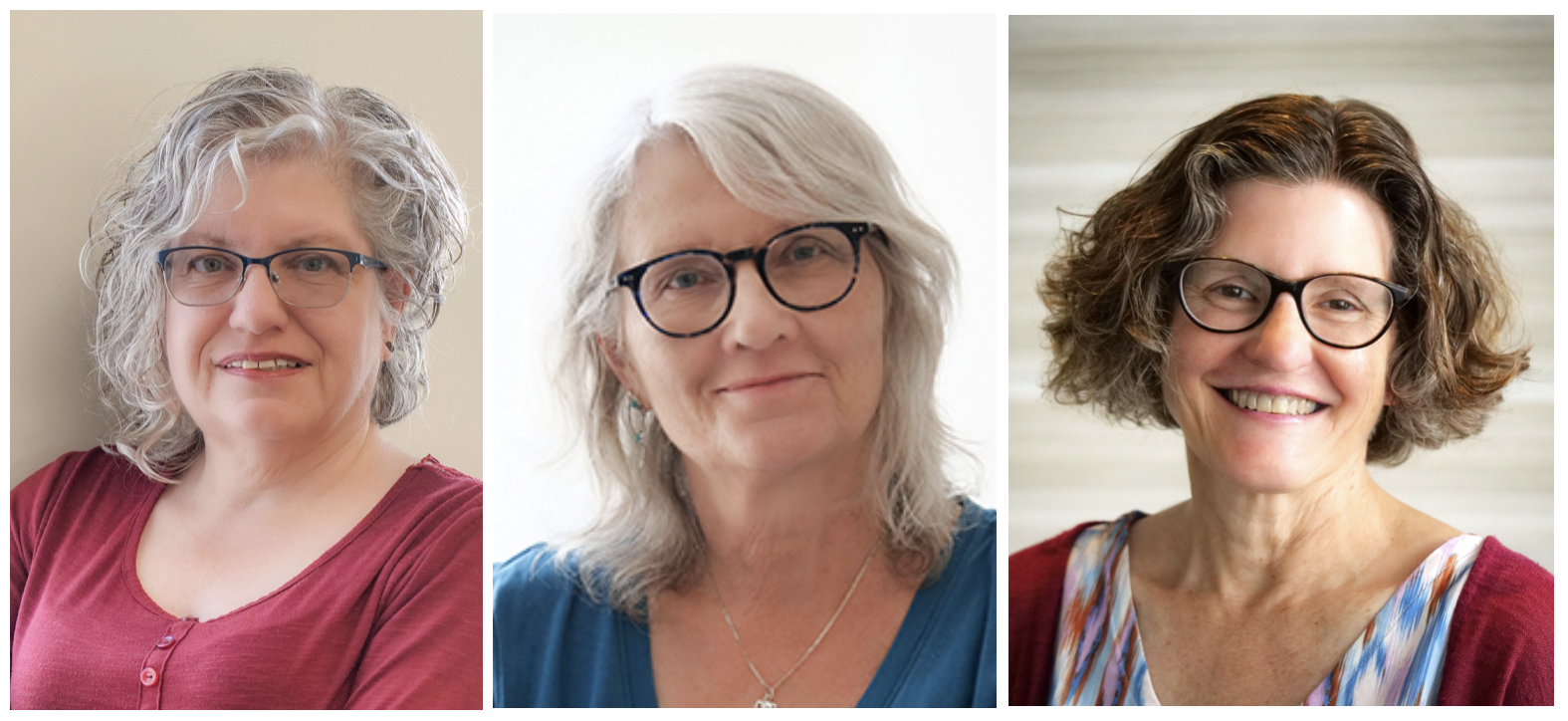
Coreen Froese: I was born on Treaty 1 land (Winnipeg, MB) and spent some of my childhood on Treaty 6 land (Langham, SK). I now live on Treaty 7 land (Calgary). My connection to Indigenous relations started at a very young age as my sisters are Cree (from Treaty 6). My understanding and awareness of the discrimination and injustices Indigenous people face has been over my life, learning through my parents’ involvement in various committees, books, Indigenous educators and elders. In my work with the Calgary John Howard Society I am confronted with the over representation of Indigenous people in the Canadian prison system. I have also learned of the strengths within Indigenous communities through visual art, pow wows, music and stage productions.

I do my best learning alongside other people. My hope, being part of the Indigenous Relations Working Group, is that it provides an opportunity for discussion, listening and learning as we grow to understand the role we, as members of MCA, play in reconciliation.
 

Ruth Bergen Braun: I grew up in a community that was half Mennonite, half Mormon, on land that was the traditional territory of the Blackfoot (specifically Siksika) people. I currently live in Calgary, Mokinsis, on Treaty 7 land. My passion for Indigenous relations began before we were even using that phrase. I spent my first summer as an adult doing Native Ministries for the Conference of Mennonites in Canada (what is now Mennonite Church Canada) and saw first-hand the inequalities in our country. That summer changed me and since then, when opportunities arose for me to develop reparative relationships with Indigenous people, I have committed to being a good friend and neighbour. Throughout my life I have attempted to educate myself, to learn about Indigenous culture particularly that of the Blackfoot people on whose land I have primarily lived, residential schools and genocide, and about the injustices still inherent in our Canadian systems.

Suzanne Gross: I grew up in a Swiss Mennonite community in Goshen, Indiana, on land formerly inhabited by the Potawatome Indigenous tribe. I currently live on Treaty 6 land, in what is colonially called Edmonton, alongside Cree, Anishinaabe, Lakota Sioux, and Blackfoot tribes.  My people are Mennonites from both First and Holyrood congregations. My passion for and connection with Indigenous relations came into focus in the context of the Truth and Reconciliation 94 Calls to Action and our Canada 150 anniversary year in 2015. In that year, I was blessed to have Bent Arrow Traditional Healing Society as my teacher as we developed together activities under the name of Miyo-wîcihtowin, (Cree for  “Good Relations”), to bridge Indigenous culture and sacred ceremony, and the newcomer settlement experience. I use these experiences to guide my Bridge Building work in the context of Indigenous Relations in local and broader Mennonite contexts. 

****

As a Working Group, we see ourselves not as event planners  -- although we may be involved in events -- but as a resource for our MCA congregations as each congregation works out how it will answer the call to reconciliation.

Therefore...

The mandate of the Indigenous Relations Working Group is to connect, equip and resource MCA congregations to engage in reconciliation with Indigenous people and communities. This engagement will look different for each congregation. Participation with the working group will help congregations discern their particular engagement.

Connect – Connect MCA congregations with each other. Connect congregations with the national network through MC Canada Indigenous Relations.

Equip – Learn from one another. Host equipping events.

Resource – Curate valuable resources


Thank you to those who attended the IRWG Workshop at the MCA March Gathering!

We had 4 questions but only got through the first two. We will be pondering your replies.


The questions were:

  1. What are we clear on?
  2. On the journey toward reconciliation with Indigenous people and our histories together, where is your congregation?    What has been considered so far?   What is currently happening?
  3. How would you identify the next phase/step of your congregations' journey?
  4. How would you like to be resourced to help you with this next phase/step?


Visit and bookmark our Resource page

__________________________________________________________________________________ 


We are not alone!
     
We have friends and resources from across Mennonite Church Canada.

We have made connections with other Working Groups in Mennonite Church Canada and can and will draw on their experience and expertise. Our MC Canada Indigenous Relations Coordinator, Jonathan Neufeld, is a valuable resource for us and others in our nationwide church.

From the MC Canada website: Mennonite Church Canada's Indigenous Relations program works to support interested congregations and regional working groups through prayerful dialogue, sharing of educational and financial resources, and collective action. We help connect constituent communities to Indigenous and settler persons, teachers, theological and social justice organizations that can be of help, and who are interested in pursuing peace and justice together. 
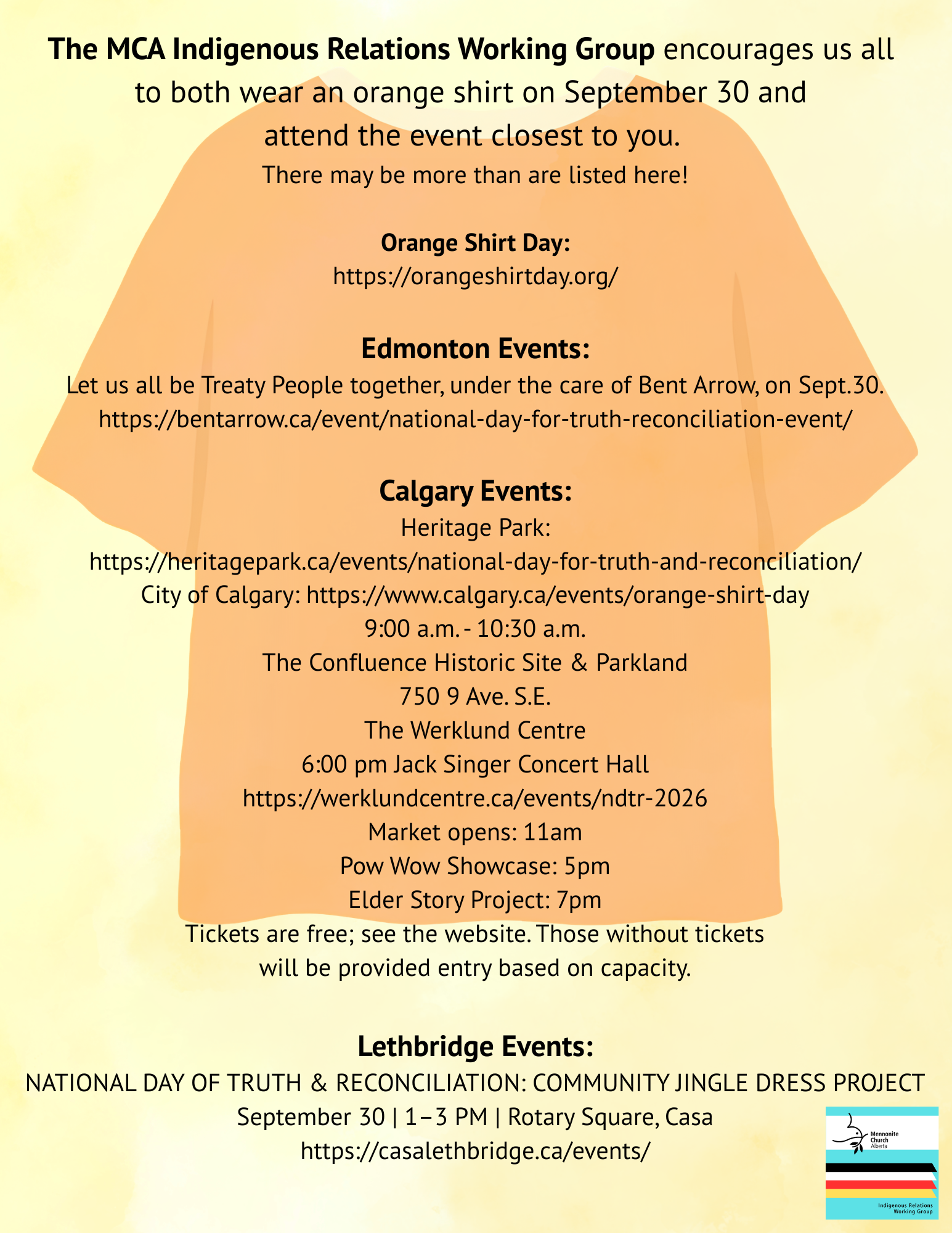
Watch for our graphic in the MCA Communiqué

This graphic was inspired by the ribbons on the talking stick used during the Climate Action & Indigenous Relations Collaboration Weekend. The blue represents the wide open sky of Alberta. The black/red/yellow/and white echo the colours of the Indigenous Medicine Wheel. 

Take some time to learn more about the Indigenous Medicine Wheel.

Current CommonWord Indigenous Relations feed

scroll right


Through our Mennonite Church Alberta ministries, we are invited to live into the intersectional experiences of harm and marginalization experienced by our Indigenous neighbours, our neighbours of minority cultural and faith traditions, and of our shared Creation.  Let us learn together to “reconcile all things.” (Colossians 1:20)  


Bridge Building Creation Care